4.7.10

Create Master Inspire - Yeah, whatever.

Despite the shows dodgy School of Economic Science name, Create Master Inspire! This coming week the The Art Academy will be celebrating it's tenth anniversary at the Menier Gallery. With range of work from current students and it's alumni. Of course this means new work from George Triggs. The new piece had been intended for this years ThreadNeedle sculpture prize but unfortunately due to production issues the deadline was missed.

Ben Wisely / Studio Seventeen'Influence' - Wisely / Studio Seventeen © 2010

Influence, is a multi-media interactive time based sculpture. The core sculptural element is a large head suspended in space. Onto which two independent projectors are aimed, one at the rear and one at the front. The front projector plays a thirty minute dvd loop. Of a selection of edited and manipulated video we created using a large fish tank and various dyes, inks and paints in water. The second projector is a real-time computer animation of a fluid simulation that takes a nearby camera as it's source data to create outlines of movement. Combined the two projections give the impression of witnessing a brain scan of some form.... fMRI or CAT scan with the pulsing and flicking. The interactivity is limited but offers you the opportunity to inject your own actions. I find the limited and subtle nature of the interactively a breath of fresh air.

Time-lapse of 'influence' being created. The sculpture required over 200kg of clay!

For me this piece is an obvious development of an earlier work, 'Movements of the mind' but taken to a new level. Movements of the Mind used a single and short dvd loop projected on a fantastic glass head. It's was a peaceful piece with the motion of the starlings in the video. Influence has a more obvious logic and feels more aggressive and thoughtful. This is a baby's head, a baby's mind... and it's exciting and dark and explosive. These are stimuli of the word. Then there is our own input. It's untangle able, intentionally or not your actions are injecting into this mind. Unfortunately I don't have any video but I will.... soon.

'Movements of the Mind' - Clarity Show 2009 - Wisely ©

29.6.10

K.Yolland.Moyse - Pick 'n' Mix

Research for Phase Two of K.Moyse's, Pick 'n' Mix multimedia, multi-everything performance series. Leveraging video projection, live data manipulation and multiple performances in a super intense and mentally dense piece that takes you on a journey through to the very heart of how you think you understand. I suppose I should say what in particular you understand but it's not that easy. The video elements linked are just a small selection of a three hour video that plays off real world war and invasion footage against Hollywood fantasies of war. Eventually the Hollywood video capitulates to the near point of indistinguishably between the 'real' and the fictional. This is just a single element in a cocktail of element across a wide range of disciplines that all work together to take you on this journey.

These images are just a splash of the 3 hours used to refine some of the roots of the performance pieces. They don't really transmit anything of the zeal and excitement of watching real people interacting and the confusion or anticipation of there actions. I'm so excited to see and hopefully be involved in the delivery of Pick 'n' Mix - Phase Two.

Ben Wisely / Studio SeventeenBen Wisely / Studio SeventeenBen Wisely / Studio SeventeenAll images: Moyse - Pick 'n' Mix - Wisely / Studio Seventeen © 2010

18.6.10

Taylor Wessing

I've never entered for a prize. Although I am competitive. Over the past few weeks I've been exploring an idea for a new series. Not sure if they fully qualify as 'portraits' although elements have what I feel is essential in portraiture. So I am biting the bullet and creating a few prints (a rare treat) and entering the National Portrait Gallery's Taylor Wessing prize.
I have looked through previous winners and entrants to gain a sense of the level of work required. The standard of work is compelling but slightly tiring. So I am more than happy to add my series. By tiring I mean I find it hard to engage with the people being presented to me via this medium.

Ben Wisely / Studio Seventeen - National Portrait Gallery Pencil - Wisely / Studio Seventeen © 5D/24-70L

I am still developing the series ethos in my mind. I see this as rather long haul as most of what I'm envisioning will require developing a good working relationship with the people I will settle on shooting. It's taken me years of photographing Pencil to extract certain aspects of her and capture them.

This image below is not really part of this work but is a fine example of playing around in the studio with yet another camera change. As much as I love the Mamiya RZ67 I just can't move around with it and get involved. It's great for locked off worked or the sculpture stuff. So finally I caved in and got a Hasselblad H1. Despite being tempted by a Contax 645, I decided to invest in a current system that is modern and flexible. All I can say is 'wow'. It's a pleasure to use, the images are perfect and the digital back integrates perfectly. My only gripe is the shear cost of lenses. As much as I would love the 120mm HC that everyone keeps telling me is awesome there is just no way I'll be able to justify one any time soon. Although I am very keen to try the HTS adapter with some new sculpture work on the horizon. I so miss having movements.

Ben Wisely / Studio SeventeenMan - Wisely / Studio Seventeen © H1/132C

Additional note: In the last few hours Flickr have specified my account as 'moderate' - the only recent change, the addition of these two images. Are they moderate. They're not sexual nudity.... am I out of step with taste levels? Or should I take this as an early warning about the fate of my image to come at the judging stage?

24.4.10

Recent Stuff.

Me and the studio have been busy. Had an amazing time shooting some rope bondage with a couple who where visiting the UK for London Festival of Japanese Rope Bondage.

Ben Wisely / Studio SeventeenLigatio Suspension One - Allropestied.com - Studio Seventeen © 132C/RZ67

More images from the shoot can be found at my Flickr. For this shoot I just stood back and let them do there thing. Whilst the lack of direction led to a few missed shots the images we made captured the journey they where on during each scene. Definitely keen to do some more fetish based work. Maybe take the lighting to a an extreme and go a little theatrical.

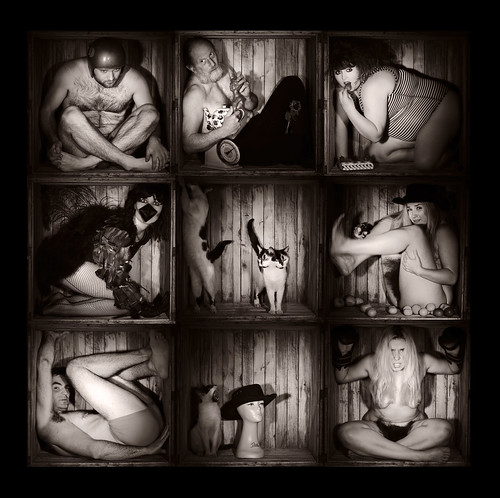
Ben Wisely / Studio SeventeenFreak Show - Concept - 132C/RZ67 - © 2010

This was a rush job for a friends degree. Very loose concept of a Victorian freak show shipping container. Given a little more time each box could have been far more refined and textured with some tasty referentiality . Although I am very happy with how this has worked out. First time I have used continuous lighting with the digital back. Using two 1.2kW Fresnel's for that authentic theater look.

Goodbye Betterlight, Hello Imacon

Having a studio on tap is becoming a real boon. It gives me time to seriously play and explore working processes without time and mess constraints. Over the past month I have made a few big changes to my own personal workflow. I sold the BetterLight. My much loved imaging beast with all it's pixels and fantastic pure RGB data is now gone. The decision to move on was born from a growing frustration at how time consuming it had become to make an image. Whilst perfect for a methodical fine art shot not so fun for something that moves or requires a fluid response. Add to this the ever growing need for continuous lights and my stretched budget for studio strobes. The real challenge for me has been to give up on having in camera movements and the precision that i have become accustomed to. After much fretting I settled on a Mamiya RZ67 ProII with an Imacon/Hasselblad iXpress 132C digital back. And since it's arrived I've not looked back...

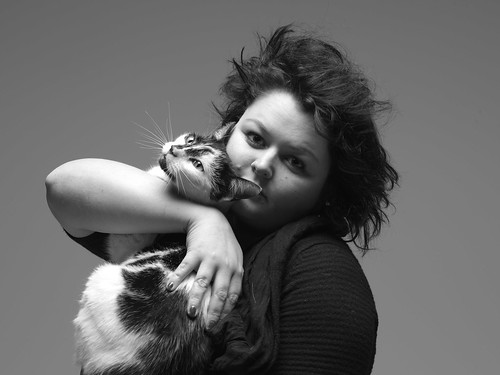
Jenny & Cat - 132C/RZ67

The camera is big but not unusably so. Also it's lenses and accessories are super cheap compared to the most current medium format digital systems. And probably my most favorite aspect of the camera is it's close focus ability's thanks to using bellows. The 22Mp Imacon back produces fantastic files, although they look coarse compared to the Betterlight. To get the best from these files I have found it best to use Hasselblads own software, Phocus. I don't know how it does it but the images that come out of this software look spectacular when compared with what i was getting using ACR or Flexlight to process the files. But there is a downside..... even on my MacPro quad core 12gb ram beast it's sluggish and slow. Just browsing feels painful. Editing is pure torment. This is something I must fix asap. There is no way i could pull a real world job off with the current speed of Phocus.

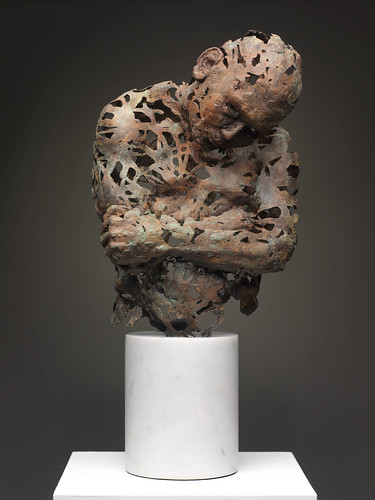
Arms Folded , Bronze Resin - George Triggs - 2010 132C/RZ67

5.2.10

Where have i been.... Studio Seventeen

Months have passed. No posting, no nothing. I have taken a short three month departure from many aspects of my life. To take my purpose of being in London to it's logical conclusion. I have set up a fully featured photography studio! Studio Seventeen is a shared space with a George Triggs, sculpture. My side of the building has a 1300 sq/ft photography studio with a 16ft infinity curve, massive array of lighting, light modifiers etc...
Infinity curve nearing completion
This coming Thursday we finally open!! Of all the construction the infinity curve has proved the most challenging. Getting the curve to be perfectly smooth has taken an inordinate amount of time, effort and money. But the finished product is perfect!
The studio is aimed at people with ideas but not the budget to rent nearly every other studio in London. Most studio's are charging obscene amounts for nothing more than a pretty white room. Often without lights or even basic equipment, well we have it all!
Studio cat - Betterlight - iso800 / f5.6 / 1/80th
Our rates a super competitive and include the use of everything in studio. Bowens flash system, 15kw of continuous film & video lighting, full kitchen.... The list goes on! For a comprehensive overview and our introductory rates check our website or email us at: info@studio-seventeen.co.uk
Of course when the studio is not booked or being used i will be pushing my other new business, Archival Digital. This will focus on my expertise with large format digital imaging, using the Betterlight scanning back.

14.9.09

Dave McKean - Narrative Arcs

Recently shot a few high resolution images for British artist Dave McKean. The images present a common challenge within fine art reproduction. Two of the images are gloss vanished they also have a light amount of impasto. This leads either the use of cross polarization or a delicate light placement. I opted for delicate light placement as this removes the exposure and colour issues introduced by the use of cross-polarization. Also i feel the image retains more of its presence without becoming too sterile. There is always a compromise when translation flat art which is textured into a purely two dimensional plane. These images are taken from Dave Mckean current exhibition at Rye Art Galley called Narrative Arcs.Dave McKean 2009

14.8.09

5D MKII - VX1000 for noughties

The 5D mkII is a real deal changer. The much-coveted depth of field of 35mm is now a hand held possibility. As with all tools within financial reach of mere mortals its awesomeness comes with a few caveats.Of these, the most prominent and much talked about is 'jello-cam’. Rolling Shutter is temporal artifact caused by the way CMOS sensors scan across an image frame. Things move during this time and create a visible distortion. In the case of the 5D this can be quite prominent. But a bit of judicious testing and thinking on a practical level reveals that this problem can be overcome. For the best part this means working at a lower shutter speed than would seem sensible. Anything under 1/80th second has appeared fine. I think a lot of the ghastly wobbly shots online come from the camera being used by people from a stills background, where adjusting temporal sampling, the shutter speed is a totality normal way of manipulating exposure. Accept in the case of the 5D's video mode the higher up the shutter speeds you go the more exaggerated the rolling shutter becomes. This leads to the use of neutral density filters to control the exposure. Obviously you can use the aperture but this leads to silly f-stops that destroy the depth of field and introduce diffraction-induced softness to the image. A more pertinent problem that has no solution is the terrible aliasing, especially on brick walls! This is where creative use of depth of field comes in handy.

In many ways getting decent images out of this camera demands treating it much like a real motion picture camera. Thinking about you shots, planning and testing where you can push it. I have been exploring workflow options. My key focus has been on effects work and grading the 5D's output. I have much to say in this area but i'll save that for a latter post.

29.7.09

Art of England - Plumpwench in print

A good start to a new era. Having just moved back to London to officially go freelance, I'm off to a good start. With five images in Art of England and the front cover! I'm even happier as the images were a rush job completed in a day without a studio.
The images were created for the first solo show of George Triggs sculptures and as entry images for ThreadNeedle 2009. It’s immensely pleasurable to see the ideas for the way the sculpture could be imaged refined to the point where it reaches a magazine front cover. For both Broken Man (the cover image) and Falling (bellow) I took advantage of my view cameras movement to emphasize the viewers positional relationship to the works.
"Falling" - Resin - 2009
"Broken Man" - Clay & Epxoy - 2009

29.10.08

HD & D-Cinema - Awesome intro

ikonoskop A-cam dII - Europe's answer to Red.

Possibly the most fascinating series of talks i have ever watched. A clear insight into the sad life i lead. This set of talks hosted by Panavison are mandatory viewing for anyone interested in imaging in the digital domain. Although the primary focus is on HD and D-Cinema imaging technology, all of the information is relative to still imaging. The explanation of MTF and it's use and context within imaging is the clearest i have ever seen or read. The talk beautifully dismantles some of the challenges involved in high resolution imaging whiles also debunking the ever flimsy metric of resolution as a measure of image quality. The 30Mhz SMPTE filter in the HD spec appears very similar to the filtering on early cd player Dacs. Basically a brick wall to filter all the aliasing noise higher up the spectrum. I doubt anyone will be raving about the non-oversampled sensor but in the face of the transfer function, at what point does it all become too much? Overtime I can see this debate and technology race drying up as CGI with virtual environments and characters become feasible and ultimately more controllable.
Ikonoskop vs Red
Europe's answer to Red. Seems like a dramatic statement but i feel it's accurate within the context of each cameras market. The Red is quite simply amazing. In the sense that it's slipped in from the leftfield and offers feature and workflow options that even the historical film technologies leaders failed to offer. And it does it at an amazing price point. If your an American indie shooting a short of a low budget feature this camera opens a whole world of options. But there in lays the rub. The American idea of low budget can often be measured in 100's of thousands. Over in Europe and especially the UK its measured in thousands! The ikonskop i feel will neatly fill the gap. Being greatly cheaper than Red but offering nearly all of the advantages of a raw HD workflow. I cannot wait to get my hand on some sample footage. But i can see this really empowering a new generation of film makers who want total control. And as someone with an eye on post, raw can only be a good thing.

9.9.08

B&W Scale Tests

After a break I'm back. Wasting gigabytes and pixels in abundance. As usual i have not even left my front room to perform these experiments. No point in going 'live' until a secure working method is resolved. In this case i am seeking to increase speed of capture and get super detail images. The speed part is controlled much like a shutter except each line of the scan is expressed as Line-Time. With a stopped down lens and the infrared filter installed this often is around 1/15th to 1/50th at approx 1000+ ISO, the cumulative effect is often five plus minutes per image scan. The ISO seems high but with the scanning back you can go quite high before any serious attention to noise is required thanks to the purity of the data. The newer BetterLight backs boast a faster (natively more sensitive) sensor that can operate at higher ISO's without introducing image noise. Alas Im not buying a new back. But by removing the infrared filter Im able to up the line-time dramatically. This comes at the expense of a colour image and normal contrast. This is only an early image, but it is constructed from six scans that were taken within about thirteen minutes. Open this image in a separate tab - it's over 7mb.
Window: 1/65th : f32 : iso758

This image is very much like an Orthochromatic image, except it's made primarily from red data. This seems to effect the contrast adversely requiring serious tweaking with curves in PS to get an image that looks vaguely normal. Even with these limitations, when viewed at 100% the level visual information is awesome. This mostly thanks to the Rodenstock Sironar S 210mm lens and delicate sharpening. This is yet to be refined even more but the core contrast of the image effects the sharpening, this symbiotic relationship makes editing a slow and ram stealing process. Another minor limiting factor here is Im shooting through a double glazed window.

The initial idea was to be able to use the sensitivity to IR as an advantage, so i could shoot in dimmer condition or possibly at night at the cost of colour and outright image quality. But then i noticed the lower scan times during daylight.
This demonstrates the benefits of IR at night. An IR filtered version would be virtually black and take considerable averaging and editing to get something visible.
Leaving the camera overnight to shoot the scene 30+ times offers enough data to create a well averaged image thus having little noise. There is also the possibility of adding the images together to simulate a super long exposure. A good overview of this technique and the software involved is here. Hopefully i'll have some tests up by the end of the week.

20.6.08

Sculpture Scans

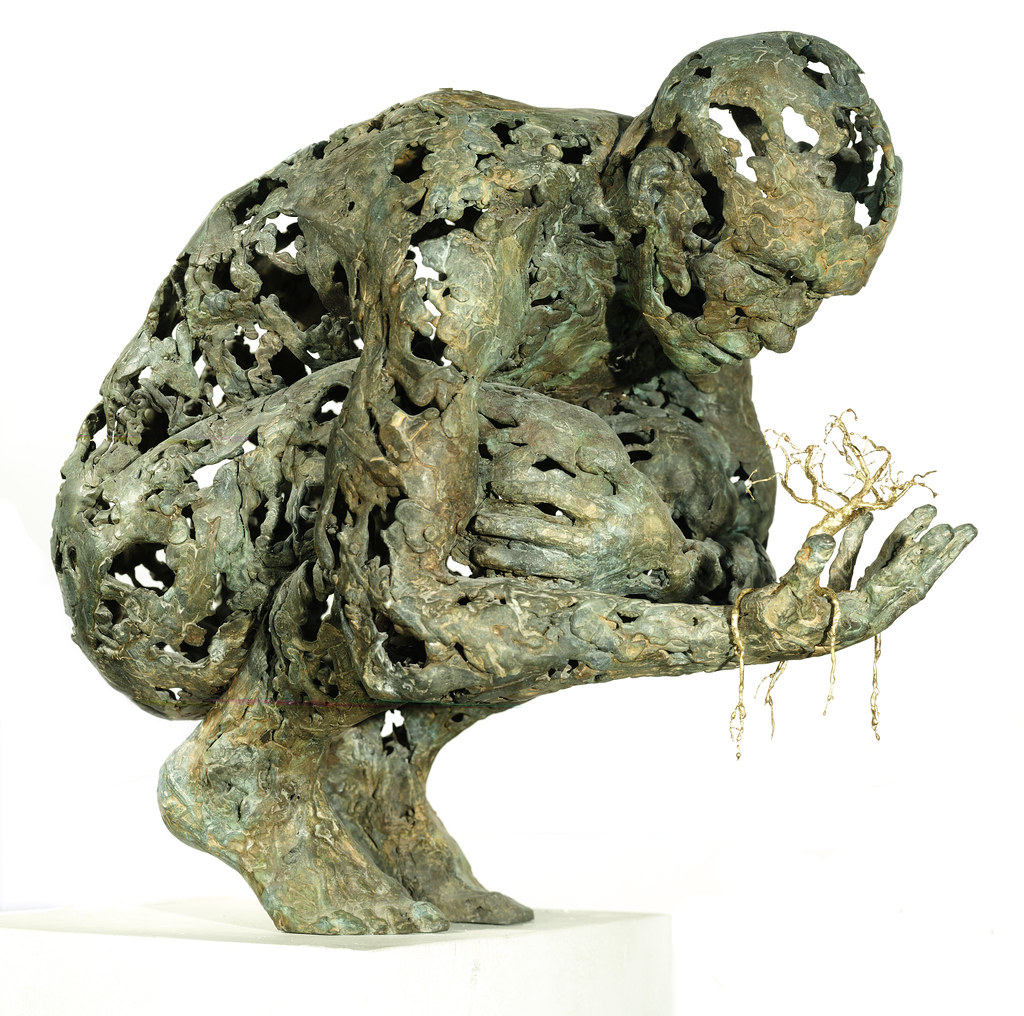
"Tree Man" - bronze & gold - 2008

New works from London based sculpture George Triggs. These pieces are being entered into the new ThreadNeedle arts competition. Hopefully these images are good enough to get him through to the selection stage. The images where shot using four Arri tungsten lamps with the BetterLight scanning back. Not the ideal lighting source with its high infrared output. The images have a few errors and small artifacts caused by power fluctuations. I chose not to edit the images to heavily as i only had my un-calibrated laptop that I dare not trust! Having looked back over the images shot. Im surprised at how hard it is to make an image of a sculpture. The Tree man sculpture as a real piece makes you interact with it and infact makes you alter your eye level. I found using the camera movements allowed me to get below the sculpture much as you do with your body but correct perspective. The glass head and projection should have ideally been shot in a studio with far more control over lighting. I could have polarized the image to remove the room based reflections but these are integral to how the piece exists. That and the fact that polarizing the projector image created peculiar distortions.

"Movements of the mind" - glass & video projection - 2008

EDIT: On the strength of theses images both works where accepted for review. On the strength of the works both where accepted into the ThreadNeedle show. The only entrant to display two works. Two out of the thirteen available for 3d work! The mans doing something right.

5.6.08

Capabilities

In a bid to get myself in a sustainable position I'm going to set myself up as a photographer. The camera is ideally suited to flat art reproduction and high resolution scanning of static objects. In plain English that means super high quality images of paintings, drawings and sculptures. Basically anything that doesn’t move can be imaged. The quality of the images will allow for prints upto A1 without any loss in quality. The images can be delivered in any format (.tiff, .jpg etc…) to any medium (cd, dvd, ftp etc…)
Unfortunately i don't really have a portfolio geared to this form of work. The nearest thing i have is a website/gallery i created for George Triggs. All these images where shot a few years ago and as such don't represent the quality that can be achieved now. If you are interested in getting some shots done for archival or portfolio purposes please drop me an email, here. All work and prices are completely negotiable and I can assure you; I’m extremely good value. To look at my more general image making practices. Please take a glance at my Flickr page.

31.5.08

End Note.

Now the printings done. It's not really the end as there is so much more to be explored beyond these simple experiments. These outcomes are a disparate shift from some of my early ideas. The real key to getting things done appears to have been to follow one element of an idea. I envisaged that my end show would be a display of screens taking a live streams from the university cctv infrastructure constructed in the fashion of quantum time, using some undecided interface that would allow you to navigate time. What I in fact will (or possibly not) be displaying is two static images of some urban space.
Quantum Time - Static TimeLapse (2006 - TV Test Image)

Scan TV (Temporal distortion implicit in method)

A common theme throughout any idea has been the use of software to generate the image at some stage. From Quantum Time; a small command line app to the use of Photomerge. A major factor to changing the route taken was the realization of the amount of up front learning that would be required to become proficient in Processing and implement even a non-live, static version of Quantum Time that used a pre prepared image/data set. Given the time constraints, software became the product of what i could learn and manipulate enough to achieve a given goal. In all honesty i should have pushed myself to write a least some code as this would have offered me far more insight and allowed me the kind of control and manipulation i crave.
I have some rather strong views on the educational aspect of these endeavors. There is no education. Higher Education is a misnomer, most of the time is spent in a self explorative state. At first this sounds valuable, through self exploration you will learn. This view is harmonious with the vision of artist hero, and no doubt some theories of learning. The problems lies with the framework you explore within. I remember way back when i was looking at uni's. A big debate back then was 'House Style' the idea that the institution was a production line for its own ideology. I found this rather offensive and focussed on places that offered freedom and exploration.... little was i to realize that a strong vision or process is in-fact a massive asset. What creates a quality institution is its commitment to a conceptual vision, imparting that to it's student to explore or resist. This seems far more valuable that floating around in a tired, banal postmodern irony. The true irony being that my institutions lack of vision is what i have resisted. What is required is progressive program that embraces the risk and uncertainty surrounding modern communication, combined with a strong focus on the vocational requirements of working in a world made of data. No tall order compared to burying your head in the sand and becoming another degree vending machine.
Movement over the duration of the scan. It's a bit of a tired technique and easily created in software from a video stream.

Where Next. More to come on that soon.....

21.5.08

Final.

These are the final images bar some editing to correct colour and contrast etc.... Not sure which to print yet.

19.5.08

Problems. Part Two

This first image was to signal the beginning of my home run with the creation of the final project images. Instead all that appeared was an image saturated with infrared. Even with the infrared filter in place the bellows appeared to be leaking and reducing the image to a red, contrast-less mess. No matter what i placed over the bellows i could not shift the infrared. Too add to this the power supply in the car cut out even though it states its good for 600w. There was no way i was drawing that much current running a laptop and the scanning back. I went home. Trying to recreate the infrared in controlled conditions appeared to be impossible. Even with a few lights against the bellows and a flash. From this i could only conclude that the colours shift was a mix of sunlight and the power supply. Im aware that scanning backs are very sensitive to their power source. But scouring the forums i could find little information of these issues.This image from today is a near success. As this project has moved along and become less about some interactive digital output from the camera, i have become more concerned with making images that will print well. This image suffered from no infrared problems but was cut short by the power supply failing again. It needs some balancing work to adjust from a rather large variation between the two exposures. Not really sure what it's of. I'll let people do the reading. Im just trying to do the making.

17.5.08

Milo Action

If only my uni would give me access to the snazzy new student attracting tech. Obviously my use for the Milo motion control arm was so abstract as to fall on deaf ears. But had i gained that access i would have been producing something very similar to this from Carnegie Mellon. My version was to be geared towards the production of a super wide field of view image with infinite depth of field with the potential to be rendered into a 3d environment for inspection/interaction. I wouldn't normally mention such things but it irritates me as Im so close to something that is out of reach to all but a precious few. Outside of the common understanding of what these machines are designed for there are thousands of exciting possibilities, only limited by the red tape that surrounds such fun toys. Calling it a toy is enough to reject you from a legitimate conversation about how you might want to use it. At least we can live safe in the knowledge that innovative uses will win over the banal as soon as it is junked or stolen.

Techno.

The technological transitions that fascinate me are one side of the process. Peoples use of images is what is going to define them beyond the current paradigm of Photography.
Computational Photography i suppose can be said to be a branch of photography that is primarily research based. Its more the science of image creation. Most of the research has obvious commercial applications and can be placed in the context of photographic progression, like increses in quality and automation. But the field also offers an insight beyond the commercial, and insight into the changes at the core of the medium.
In terms of creating images with extended depth of Field their are several notable methods that mostly rely on encoding additional data into the image for post processing. These manifest themselves as a mixture of hardware modification and software.There is a passing similarity to Dolby and the methods employed to transpose the audio signal into the optimum frequency range of a given tape or RIAA tone curves that perform a similar task on vinyl.
Accept these modern methods of encoding create additional data that can be used to manipulate the image. This video is a reasonably comprehensive overview of the key methods involved.

This work from Stanford using a large array of cameras is just amazing. Im particularly impressed by the Synthetic Aperture video near the end.
EDIT: As per request. A link to a hi-res version of this video

13.5.08

Gefeller

Andreas Gefeller - another veteran of Bernd and Hilla Becher teaching at the Düsseldorf Art Academy. Who's distinctive pedagogy and conceptual vision of a comparative taxonomy of utilitarian structures has become a standard in art photography. Gefeller's images are overt composites that upon closer inspection reveal that they are pure digital manipulations with obvious joins and blends.
In this sense I find them much like the use of blocky, and poor resolution fonts within in graphic design acting as obvious motifs for 'digital'. This shorthand screams at you to question the age-old question of reality and representation within photography. But it does more than this; it forces observation of built environments. In fact they remind me of Intelligence Photographs, revealing paths and human interactions on an environment from a odd and totally unnatural perspective. Of course their are many visual parallels within contemporary photography, im thinking Hockney's 'Joiners' and Gursky's vast, super detail composites. Im not really sure where to place his work in relation to mine. Im jealous of his education, why am I not under the thumb of someone with a vision. Even if their vision were not mine at least I would have something to work against. Instead Im at the soft end of a triple expansion engine, its hard to place your self in opposition or sympathy actively. Or at least I find it to be. I don't really need to place his work, i just need to keep exploring without solid guidance. The obvious fear being following desire will lead to nothing.

'Desire is always for the past, for the lost infantile completeness. Desire is always about our sense of lack'

7.5.08

Problems. Part One

The scanning back has presented a set of problems that I thoroughly underestimated and to add to this my conceptual resolve is under significant strain also. I'll start with the technical issues first. All my testing has lead to one thing becoming very obvious. With the increased effective sensor size their has been a dramatic loss of depth of field. This is something I really over looked even though I have experienced it. This .pdf outlines the concepts and mathematics involved clearly. So even with fewer exposures required to cover the image circle of the lens there is an increase in the number of images required to create a fully focused image-by-image stacking. The common adage of stopping the lens down to clasp back some depth is incredibly mis leading. Whiles this methodology works to an extent it also at some point gives way to lens diffraction that’s begins to soften the entire image. And in the case of my 210mm lens even at a reasonable aperture of f32, focused at 10ft I only have 6" of depth in focus. At 20ft the depth of field rises to around 2ft. The implications for image stacking are hideous. To cover an image like the Basement is going to take at least 5 scans and that’s pushing it. I have attempted to increase the perception of depth of field via some delicate sharpening but for any perceptual gain it is soon lost in the layer stacking process that just blurs the poor transition from to out. This test below show all the new problems. Made using 4 layers per camera movement at around f16 with each scan taking about 8 minutes. The transitions between each layer that are out of focus and have no data thats in focus come out blurred just like with the dslr. Another issue that has occurred now, is that at the extremes of the camera movement there is some serious lens distortion. I was aware of this with the dslr composites but as the BetterLight back can be moved beyond the image circle the effect becomes incredibly obvious. The use of the dslr had limited the sensor ever getting to these distorted areas. This brings me to the field of view. Now that the 90mm lens is in commission I have been testing out what it can do. Having a wider field of view (100 deg) compared to the 210mm (72 deg) means it benefits from a compressing effect allowing for a potentially greater perceptual depth of field. This comes at the cost of some distortion and a positively miniature projected image circle of 216mm. The smaller imaging circle turns into fast light loss and crazy distortion. So it’s not really a solution for large composites....
But their is hope. Having tested my lenses solidly for the last few days I have been able to calculate the highest aperture that I can use before the diffraction cannot be mitigated with sharpening. The rather mundane result below has depth of field from as far as the hilltops to the boot of the silver car in the foreground. All these issues with depth of field are very landscape people type issues. Of course the methods im using to create these images are dated and by no means innovative. The real development and exciting stuff is being researched and explored in labs. Methods for gaining more depth of field are a popular area for Computation Photography. Two of the most accessible methods are Coded Aperture and Lightfield. Both require a change in the hardware of a camera to work but all use software to resolve their final output.